Buckingham’s private machine becomes the band’s public comeback.
The attraction is the contradiction: sampling craft and polished singles conceal a band being pulled back together just long enough to make one more huge record.
Tango in the Night turned Lindsey Buckingham’s private home-studio vision into Fleetwood Mac’s last classic-lineup blockbuster — and the fracture point that ended an era.
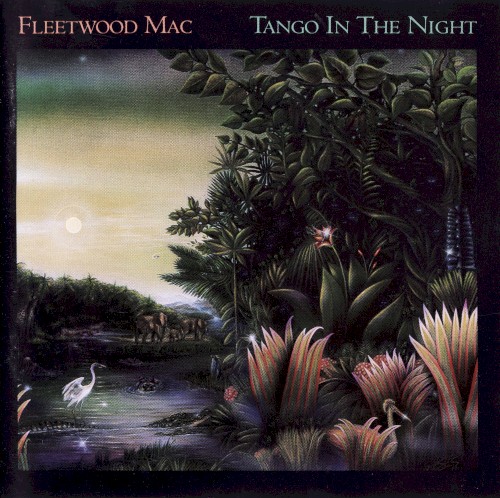
The page follows the user’s Fleetwood Mac request by using the real Tango in the Night cover as the design anchor: #0d0511, #180f17, #1f1b1e, #373232, #6b665f, and #cabda5 become a late-night studio surface rather than a bright retro costume.
The attraction is the contradiction: sampling craft and polished singles conceal a band being pulled back together just long enough to make one more huge record.
Buckingham’s home-studio and sampling craft, Mick Fleetwood’s intervention, Stevie Nicks’ brief and troubled studio window, and the polished singles “Big Love,” “Little Lies,” and “Everywhere” create the page’s central desire: hear the hit, then understand the cost.
A comeback-sized hit, built from a solo record, became the last classic-lineup studio statement for a decade.
One of the tracks recorded by Buckingham alone before the project was folded into Fleetwood Mac.
A gleaming Christine McVie-era single that keeps the requested “female stars” angle present through real band material.
The warm radio face of an album whose making was far less effortless than its choruses suggest.
This collector section stays grounded in catalogue facts: Warner Bros., 1987, Lindsey Buckingham/Richard Dashut production, and the classic five-piece era’s final studio checkpoint.
Open the full Tango in the Night catalogue entry for the Buckingham home-studio story, then take the argument to the Fan Zone: did the classic lineup’s final studio blockbuster justify the fracture?