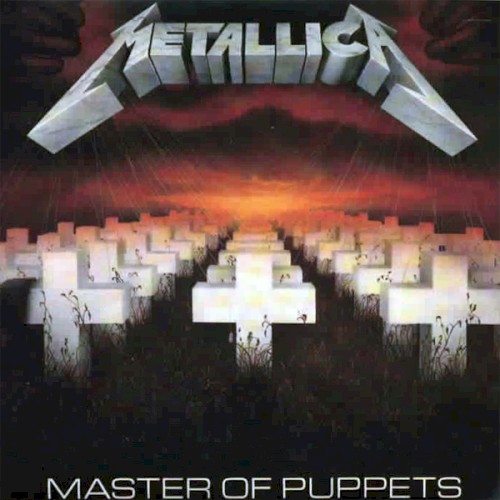
Recorded September 1985-January 1986 in Copenhagen on a 1976 Trident A Range console with two synced 24-track analog tape machines.
Attraction / Desire
Engineered like a pressure test, remembered like a monument.
Master of Puppets is not only a metal milestone; it is a tactile analog engineering story. Flemming Rasmussen’s no-reverb room, the Trident console, Hetfield’s hand-stacked rhythm wall, and Cliff Burton’s live-monitor bass parts make the album feel built rather than merely recorded.
The huge drum sound came from natural ambience in Sweet Silence’s 45-by-60-foot warehouse space rather than artificial wash.
James Hetfield tracked every rhythm-guitar part himself, often layering four to eight identical takes per song.
Burton cut “Orion” interludes and other bass parts live in the vocal booth through JBL 4333 monitors months before his death.
Sweet Silence Console
Analog tension you can almost see moving.
The motion stays restrained: tape-counter grids, low VU pulses, and the cover-derived #854b43 accent. No fake studio paperwork, no generic flames, no invented Metallica imagery.
SIGNAL CHAIN · ROOM / TAPE / HAND-STACKED TAKES
Four to eight takes, not one copied shortcut.
The campaign’s studio evidence becomes the page’s rhythm: repeated lines, hard shadows, and a single warm pulse, all derived from the actual sleeve palette of #161718, #2a221f, #423734, #9e8b81, #d3cfca, and #854b43.
Era Timeline
From Copenhagen sessions to permanent thrash scripture.
Sep 1985
Metallica begins the sessions at Sweet Silence Studios, returning to Rasmussen’s Copenhagen room after Ride the Lightning.
Winter 1985-86
Trident console discipline, synced analog machines, natural-room drums, and Hetfield’s layered rhythm tracks define the sound.
Mar 1986
Master of Puppets lands as Metallica’s commercial breakthrough even with a Billboard 200 peak of #29.
Sep 1986
Cliff Burton dies in a Swedish tour-bus accident, turning these bass passages into his final studio statement.
Social Proof / Context
The record behind the engineering myth.
Artist
Metallica
Label
Elektra Records
Producer
Metallica, Flemming Rasmussen
Chart Peak
#29 Billboard 200
Notable Tracks
Battery · Master of Puppets · Welcome Home (Sanitarium)
- Battery
- Master Of Puppets
- The Thing That Should Not Be
- Welcome Home (Sanitarium)
- Disposable Heroes
- Leper Messiah
- Orion
- Damage, Inc.
Subscribe / Catalogue CTA
Open the full Sweet Silence file, then take the riff argument to the Fan Zone.
Explore the complete Master of Puppets catalogue entry for the Sweet Silence recording history, then name the Cliff Burton passage or rhythm-wall moment that still hits hardest.